




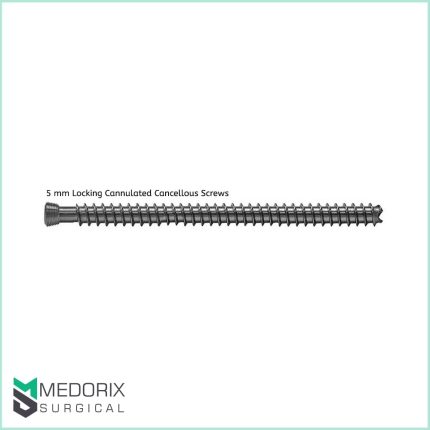
5 mm Locking Cannulated Cancellous Screw
Sizes and Uses of 5 mm Locking Cannulated Cancellous Screw
- 5 mm Locking Cannulated Cancellous Screw is intended for fixation of fractures, fusions, and osteotomies of Small and large bones appropriate for the size of the device.
- Cannulated screw have a hollow central shaft. Both cortical and cancellous screws can be cannulated. Cannulated cancellous screws are used for metaphyseal fractures while cannulated and noncannulated cortical screws are used as lag screws for fixation of diaphyseal fractures.
- Partially threaded screws may be used to lag one bone fragment to another, where the bone fragment is captured by the threads of the screw and pulled toward the near cortex fragment on the head side of the screw. Fully threaded screws are intended to be used to stabilize fractures with little to no compression across the fracture.
- Cannulated screw system provide emergency closed reduction, percutaneous screw fixation and excellent stability.
- Cannulated bone screws in comparation with traditional screws decrease surgical time, allow more precise screw placement and reduce possibility of errors.
- One special type of cannulated cancellous screw is the Knowles pin which is a Cannulated screws used for fixation of slipped capital femoral epiphysis in children.

5 mm Locking Cannulated Screw
Sizes and Uses of 5 mm Locking Cannulated Screw
- 5 mm Locking Cannulated Screw is intended for fixation of fractures, fusions, and osteotomies of Small and large bones appropriate for the size of the device.
- Cannulated screw have a hollow central shaft. Both cortical and cancellous screws can be cannulated. Cannulated cancellous screws are used for metaphyseal fractures while cannulated and noncannulated cortical screws are used as lag screws for fixation of diaphyseal fractures.
- Partially threaded screws may be used to lag one bone fragment to another, where the bone fragment is captured by the threads of the screw and pulled toward the near cortex fragment on the head side of the screw. Fully threaded screws are intended to be used to stabilize fractures with little to no compression across the fracture.
- Cannulated screw system provide emergency closed reduction, percutaneous screw fixation and excellent stability.
- Cannulated bone screws in comparation with traditional screws decrease surgical time, allow more precise screw placement and reduce possibility of errors.
- One special type of cannulated cancellous screw is the Knowles pin which is a Cannulated screws used for fixation of slipped capital femoral epiphysis in children.
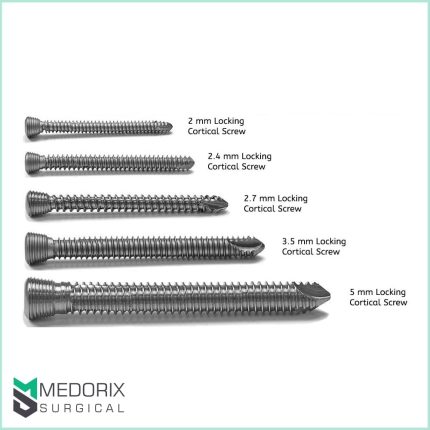
5 mm Locking Cortical Screw
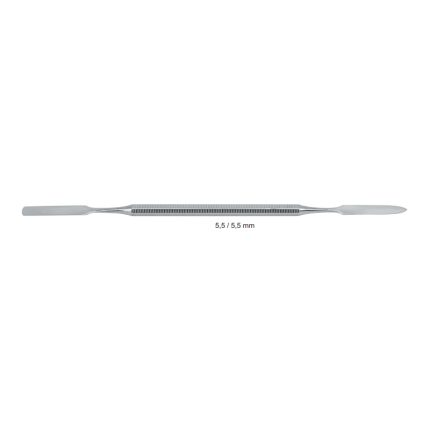
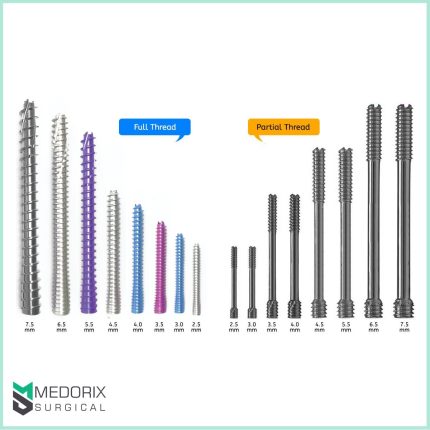
5.5 mm Headless Compression Screw
Sizes and Uses of 5.5 mm Headless Compression Screw
Headless Compression Screws are designed to be used in bone reconstruction, osteotomy, arthrodesis, joint fusion, fracture repair and fracture fixation of bones appropriate for the size of the device.
5.5 mm Headless Compression Screw is intended for bone fixation of the hand and foot flowing trauma or osteotomy. Self Tapping and reverse cutting flutes on both ends of the screw aid with insertion and removal. Tapered profile gaining compression and maximizing pull-out strength along its entire length.
5.5 mm Headless Compression Screw is used for fusions, fractures, or osteotomies of the clavicle, humerus, radius, ulna, ilium, femur, patella, fibula, tibia, talus, malleolus, and calcaneus.
2.5mm, 3.0mm, 3.5mm, 4.0mm, 4.5mm, 5.5mm, 6.5mm, 7.5mm Full Thread
2.5mm, 3.0mm, 3.5mm, 4.0mm, 4.5mm, 5.5mm, 6.5mm, 7.5mm Partial Thread
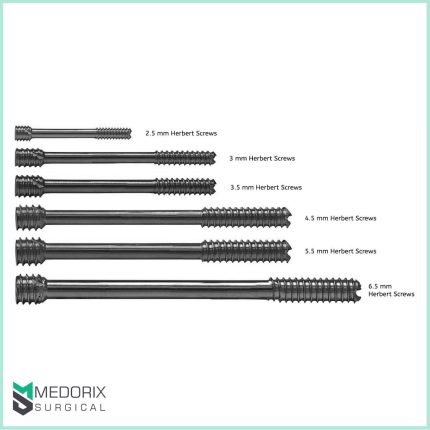
5.5 mm Herbert Screw
Sizes and Uses of 5.5 mm Herbert Screw
Herbert Screw is designed for the management of fractures where minimal tissue coverage makes standard screw use inappropriate or where
extreme precision in fragment alignment is imperative. Such locations might include fractures of the:
Olecranon and malleolar region
Distal femur
Proximal tibia
Distal tibia
5.5 mm Herbert Screw is indicated for fracture fixation, reconstruction, osteotomy, and arthrodesis of various bones and bone fragments including joint fusions (arthrodeses) in the foot and fixation of intra-articular fractures of the humerus, femur and tibia.
2.5 mm Herbert Screw
3 mm Herbert Screw
3.5 mm Herbert Screw
4.5 mm Herbert Screw
5.5 mm Herbert Screw
6.5 mm Herbert Screw

6.4 mm PFN Bolt Cannulated

6.5 mm Cancellous Screw
Sizes and Uses of 6.5 mm Cancellous Screw
6.5 mm Cancellous Screw is intended for fracture fixation of large bones and large bone fragments.
This Screw is also indicated for:
- Femoral neck fractures
- Slipped capital femoral epiphyses
- Tibial plateau fractures
- Ankle arthrodeses
- Pediatric femoral neck fractures
- Intercondylar femur fractures
- Sacroiliac joint disruptions
- Subtalar arthrodeses 3.5 mm Locking Cancellous Screw 4 mm Locking Cancellous Screw Short Thread 4 mm Locking Cancellous Screw Short Thread 6.5 mm Cancellous Screw 16 mm Thread 6.5 mm Cancellous Screw 32 mm Thread 6.5 mm Locking Cancellous Screw Full Thread
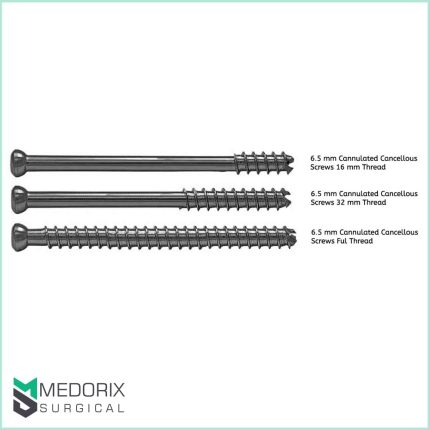
6.5 mm Cannulated Cancellous Screw
Sizes and Uses of 6.5 mm Cannulated Cancellous Screw
- 6.5 mm Cannulated Cancellous Screw is intended for fixation of fractures, fusions, and osteotomies of Small and large bones appropriate for the size of the device.
- Cannulated screw have a hollow central shaft. Both cortical and cancellous screws can be cannulated. Cannulated cancellous screws are used for metaphyseal fractures while cannulated and noncannulated cortical screws are used as lag screws for fixation of diaphyseal fractures.
- Partially threaded screws may be used to lag one bone fragment to another, where the bone fragment is captured by the threads of the screw and pulled toward the near cortex fragment on the head side of the screw. Fully threaded screws are intended to be used to stabilize fractures with little to no compression across the fracture.
- Cannulated screw system provide emergency closed reduction, percutaneous screw fixation and excellent stability.
- Cannulated bone screws in comparation with traditional screws decrease surgical time, allow more precise screw placement and reduce possibility of errors.
- One special type of cannulated cancellous screw is the Knowles pin which is a Cannulated screws used for fixation of slipped capital femoral epiphysis in children. 6.5 mm Cannulated Cancellous Screw 16 mm Thread 6.5 mm Cannulated Cancellous Screw 32 mm Thread 6.5 mm Cannulated Cancellous Screw Full Thread
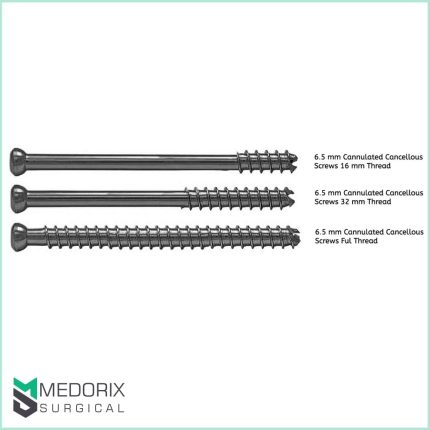
6.5 mm Cannulated Screw
Sizes and Uses of 6.5 mm Cannulated Screw
- 6.5 mm Cannulated Screw is intended for fixation of fractures, fusions, and osteotomies of Small and large bones appropriate for the size of the device.
- Cannulated screw have a hollow central shaft. Both cortical and cancellous screws can be cannulated. Cannulated cancellous screws are used for metaphyseal fractures while cannulated and noncannulated cortical screws are used as lag screws for fixation of diaphyseal fractures.
- Partially threaded screws may be used to lag one bone fragment to another, where the bone fragment is captured by the threads of the screw and pulled toward the near cortex fragment on the head side of the screw. Fully threaded screws are intended to be used to stabilize fractures with little to no compression across the fracture.
- Cannulated screw system provide emergency closed reduction, percutaneous screw fixation and excellent stability.
- Cannulated bone screws in comparation with traditional screws decrease surgical time, allow more precise screw placement and reduce possibility of errors.
- One special type of cannulated cancellous screw is the Knowles pin which is a Cannulated screws used for fixation of slipped capital femoral epiphysis in children. 6.5 mm Cannulated Cancellous Screw 16 mm Thread 6.5 mm Cannulated Cancellous Screw 32 mm Thread 6.5 mm Cannulated Cancellous Screw Full Thread